
I Failed a Coding Interview — And It Doesn't Matter

Here’s a question I can’t figure out: Am I a software engineer who codes, or a system designer who directs AI?
Because the job market doesn’t seem to know either.
The Interview That Changed Everything
I had a pretty standard first-round interview with a startup recently. We talked about the company, the role, and my experience — it was a good conversation. Then, at the end, the recruiter surprised me with a coding challenge.
I was honest with him.
“Look, if I’d known there was a coding portion, I would have brushed up, but I haven’t written code since November. AI does all my coding now.”
He wasn’t ready for that answer. Honestly, neither was I.
But it made me realize something important. As a job seeker in 2026, I don’t know what I’m supposed to be preparing for—and I think a lot of us are in that same boat.
The Mismatch Nobody’s Talking About
The role is changing faster than the interview process.
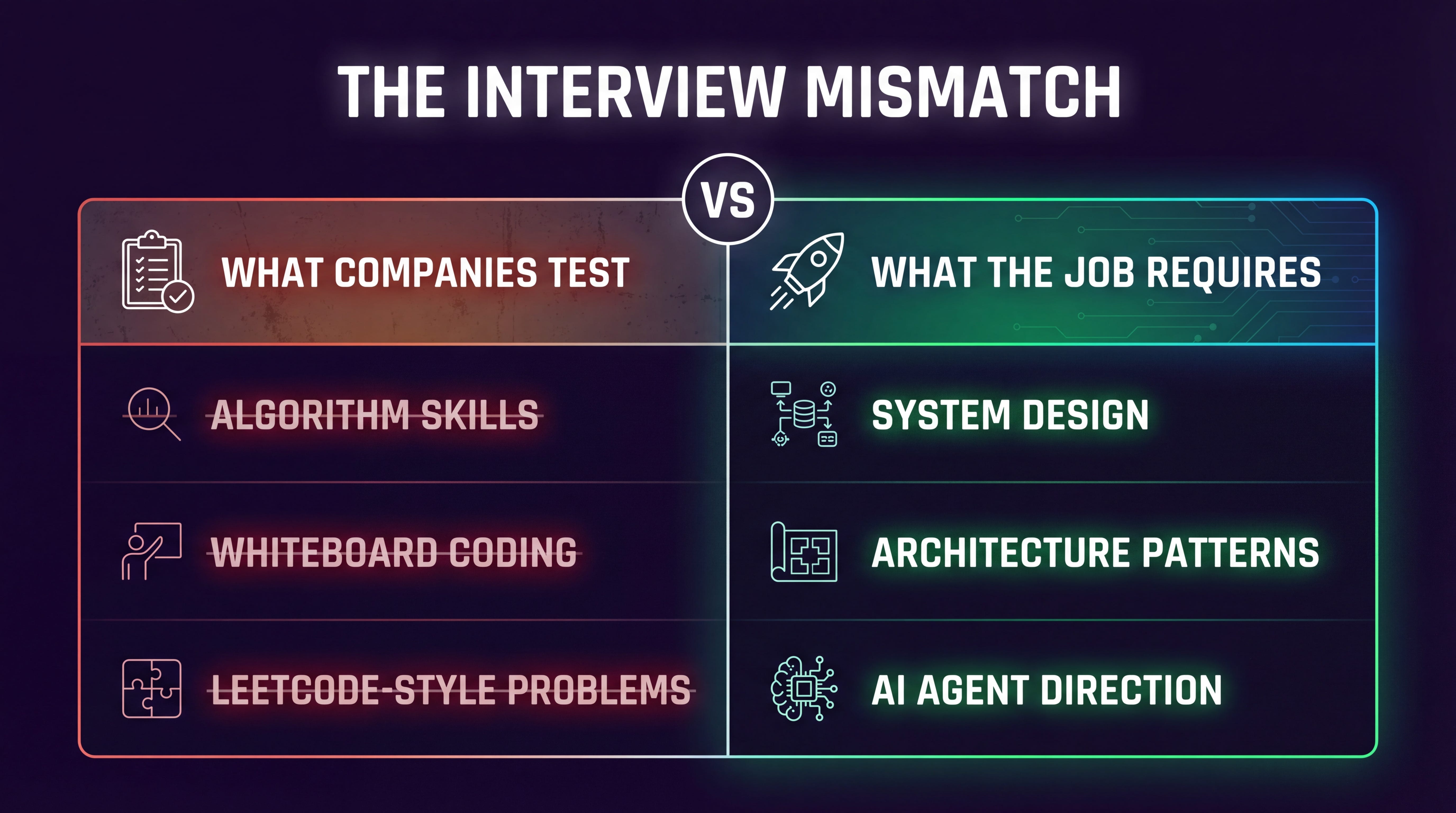
Companies are still testing for algorithm skills, whiteboard coding, and LeetCode-style problems. But in my actual job? I haven’t touched a keyboard to write code in months.
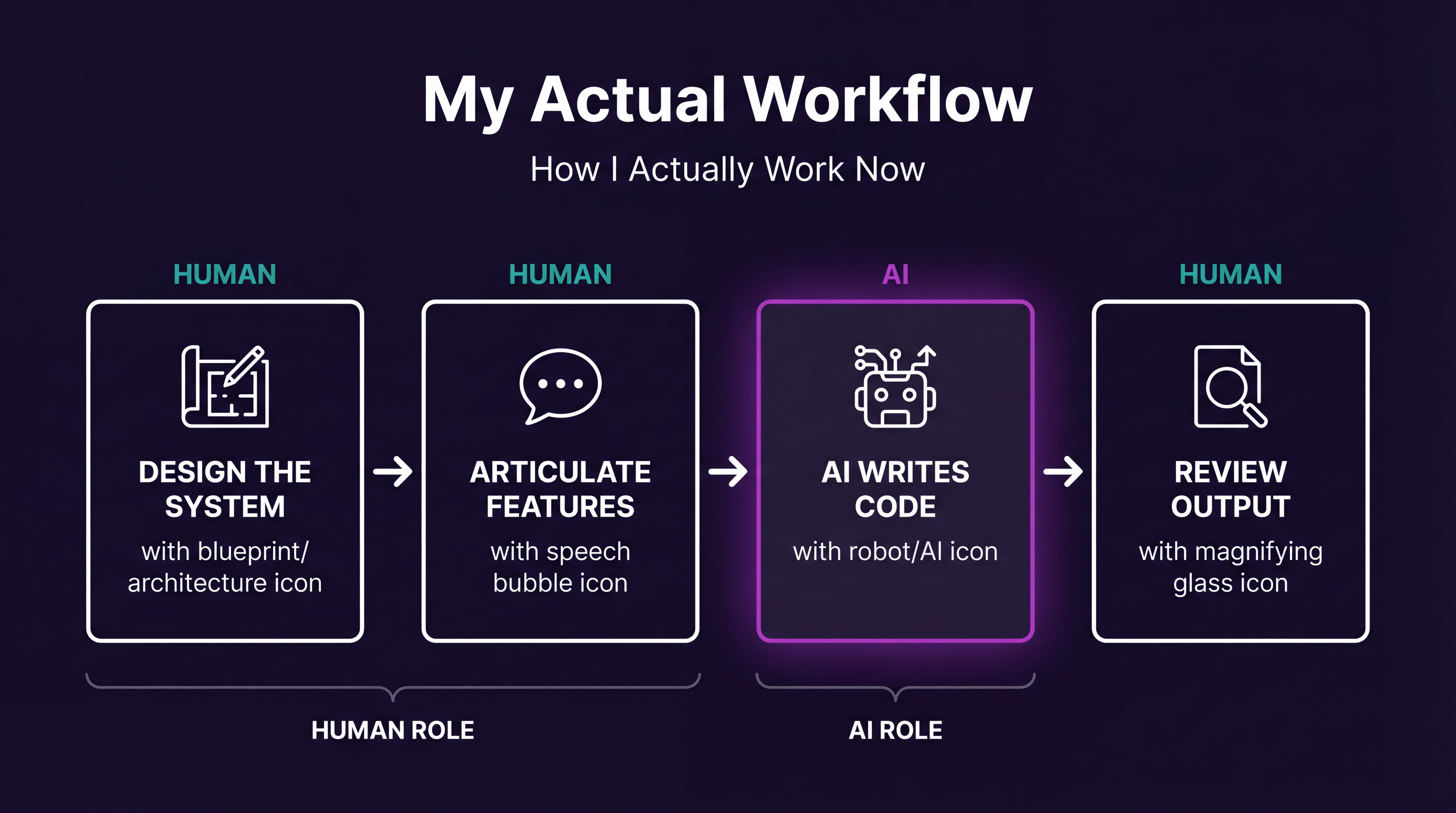
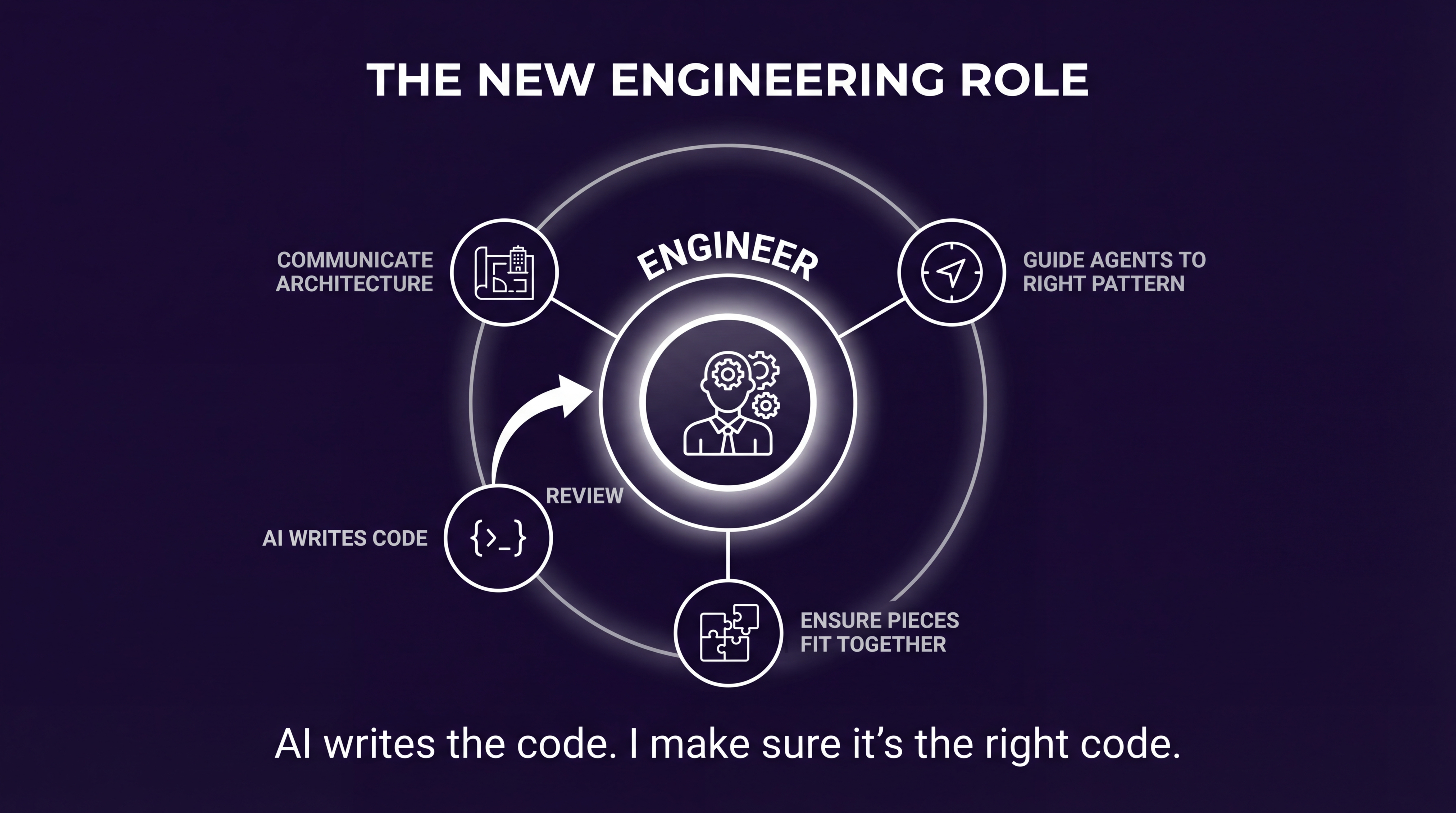
AI writes the code. I design the system. I articulate the features. I review the output.
There’s a fundamental mismatch between what companies test for and what the job actually requires now. And that mismatch has forced me to ask a harder question:
What are the skills that actually matter?
What the Right Interviews Look Like
In the interviews I’ve had recently, the ones that felt right weren’t coding tests. They were:
System design conversations
Architecture pattern discussions
How you structure an application
How do you guide an AI agent to build the right thing
Coding knowledge is still relevant—but not for writing code. It’s for reviewing it. For directing it.
Why AI Can’t See the Forest
Here’s what I’ve learned working with AI every day:
AI can’t see the forest. It’s incredible at implementing the feature—it sees the trees—but it doesn’t know the existing patterns in your application. It doesn’t understand the architecture.
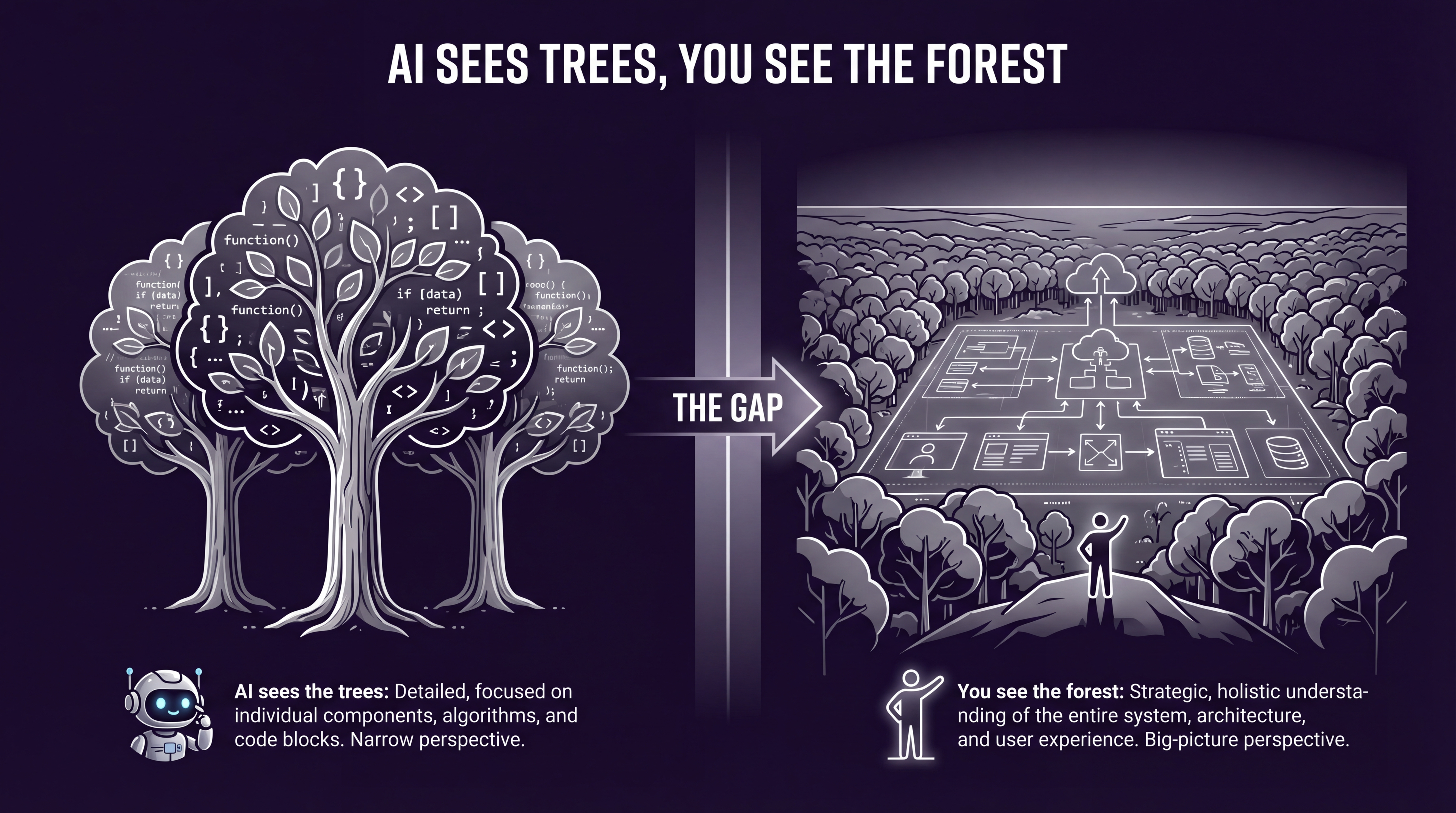
You can tell it. I do that in Claude every day. But it’s my job to hold that vision.
That’s the gap. That’s the new engineering role.
The human’s job is to:
Communicate the architecture clearly
Guide the agents toward the right pattern
Make sure the pieces fit together
AI writes the code. I make sure it’s the right code.
The Role That’s Emerging
So when I think about what I’m preparing for now, I’m not preparing for coding tests anymore.
I’m focusing on:
System design and how to think about complex applications
Architecture patterns and when to apply them
Clear articulation—how to describe what I want precisely enough that an agent can build it
If a company wants me to grind LeetCode-style problems and whiteboard algorithms, we’re not aligned on what the role is.
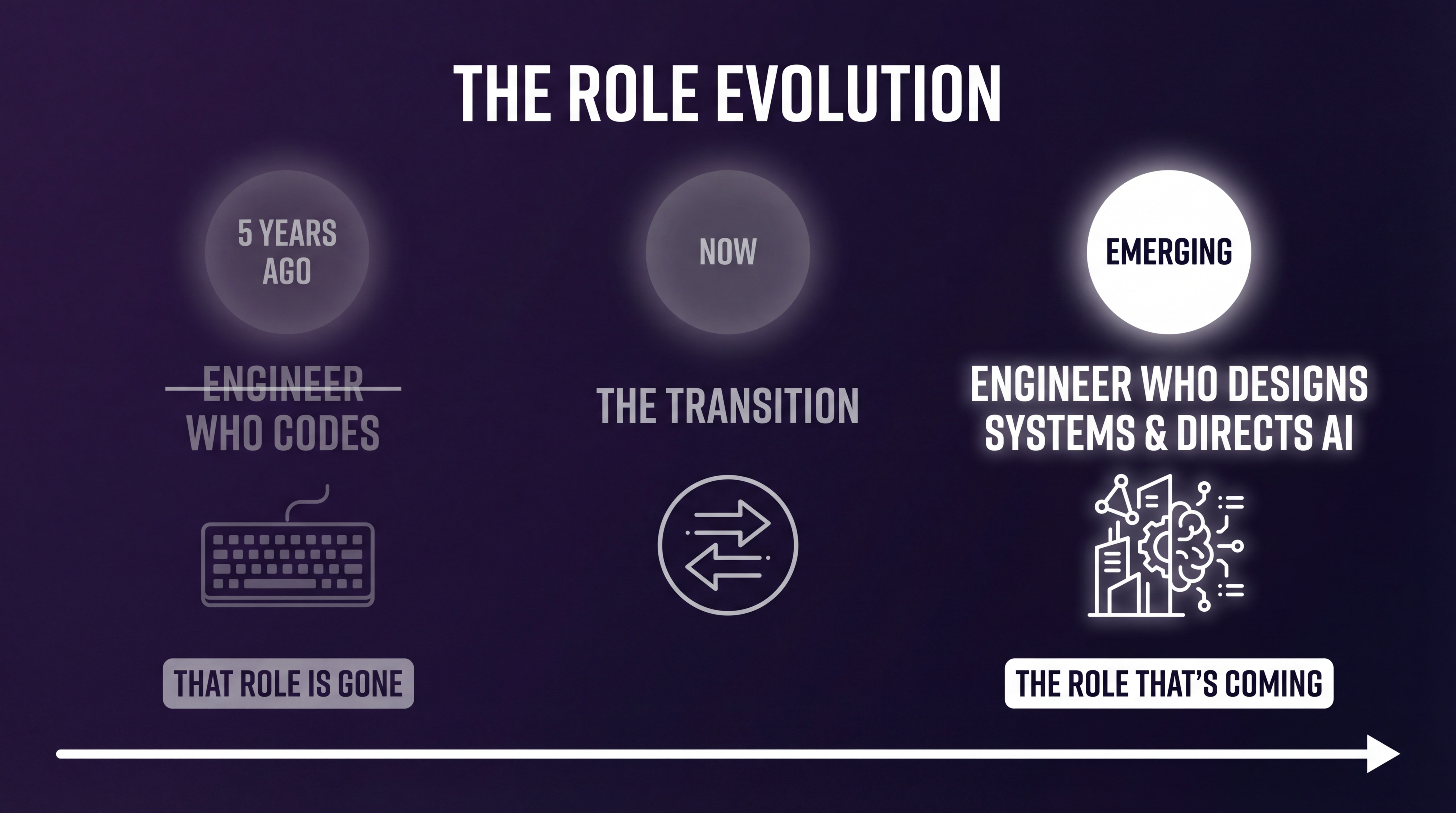
Because the role I’m preparing for—the role I think is emerging—isn’t “engineer who codes.”
That role is gone. That role was five years ago.
The new role is an engineer who designs systems and directs AI to build them.
What This Means for You
If you’re a job seeker right now, you’re caught in the same transition I am.
The market hasn’t caught up yet. Some companies still test for the old skills, but the actual work is shifting—and fast.
Don’t feel bad if you haven’t been coding. That’s not the skill gap.
Instead, focus on:
System design fundamentals
Architecture and how applications fit together
Communication skills for working with AI agents
The role is changing. Make sure you’re prepared for the role that’s coming, not the one that’s disappearing.
My New Approach
I don’t know if I failed that interview or if that interview failed to test for the right thing.
But I know this: I’m not grinding LeetCode anymore.
It just doesn’t make sense. It feels like a waste of my time. Instead, I’m building the skills for the role I actually want.
Have you been in an interview recently that felt misaligned with the actual work you do? I’m curious if I’m the only one feeling this shift.
If this resonated, I’ve got more content on AI engineering and how the space is evolving. Subscribe to my newsletter so you don’t miss what’s coming next.